Zhi Mei
 Privat
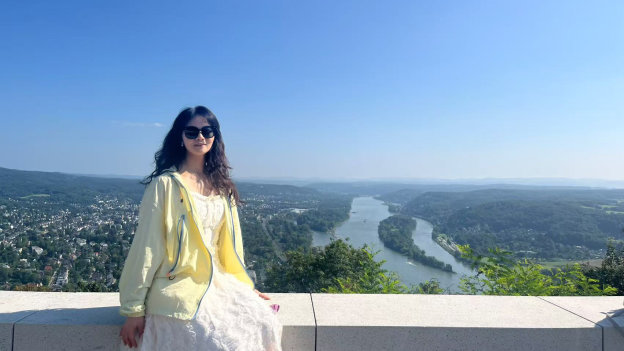
View on the Rhine Valley
“My stay in Bonn was both scientifically enriching and personally meaningful, broadening my research capabilities and deepening my cultural understanding.”
During her research stay at the University of Bonn, which was funded by the first Friends Scholarship donated by Philip and Fritz Hauser, Dr. Zhi Mei had the opportunity to advance a joint research project and experience a different culture, broadening her personal and professional horizons. Since she does not speak German she appreciated that not only most colleagues at the university spoke fluent English, but also local people in supermarkets, gyms, and restaurants.
Research Work
My academic background is in Environmental Science, with a focus on soil micro-organisms and their ecological functions. When I was approaching the end of my PhD last year, I discussed potential collaborations with Prof. Wulf Amelung.
We quickly realized that we shared a strong interest in a topic that neither side could fully address alone—linking individual soil aggregates with their associated microbial diversity. This provided a unique opportunity to combine complementary expertise.
Privat
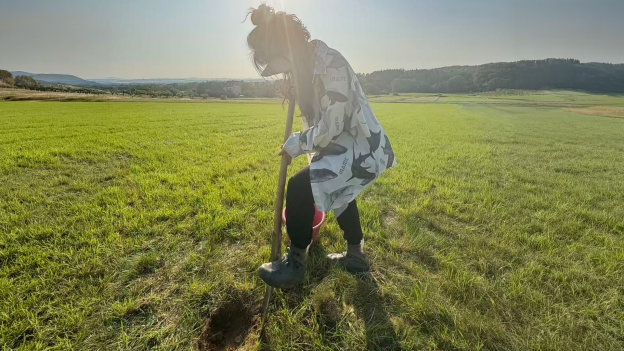
Soil sampling in the agricultural field
In addition to the scientific motivation, I was also eager to experience living in Germany. I had long been curious about the country’s research culture, academic environment, and everyday life. The opportunity to spend several months in Bonn offered a chance not only to advance a collaborative research project, but also to immerse myself in a different culture and broaden my personal and professional horizons.
During my stay in Bonn, I focused primarily on studying microbial diversity within soil aggregates collected from experimental farm plots managed by the University of Bonn.This fieldwork allowed me to directly connect the environmental context to the microbial dynamics analyzed in the laboratory. It was also my first experience working at an agricultural research site in Germany—an experience that was scientifically valuable and personally memorable.
Privat
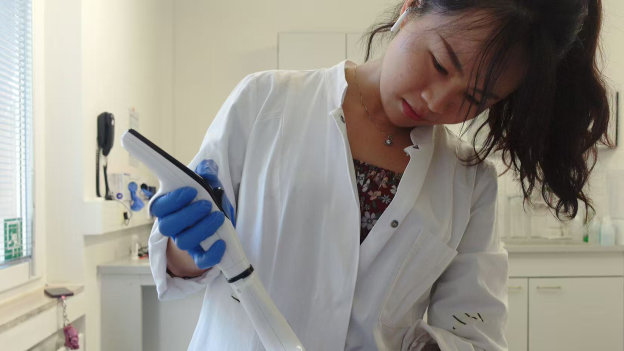
In the lab
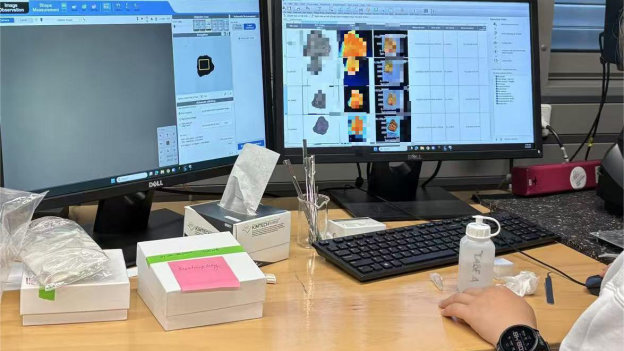
Back in the laboratory, I spent most of my time fractionating soil aggregates, imaging them, extracting microbial DNA, running PCR, and preparing samples for sequencing. Together with researchers at the University of Augsburg, we also conducted laser imaging of individual aggregates.
Although the sequencing results are still pending and will take some time to complete, we expect to determine whether aggregates of similar size within the same soil share comparable microbial communities. This knowledge may eventually improve our understanding of how soil structure influences microbial distribution. This stay also strengthened my technical skills and provided the basis for a manuscript that we plan to prepare once the data become available.
Privat
Soil sample imaging at the University of Augsburg
Working in the lab at the University of Bonn gave me hands-on experience with local workflows and laboratory equipment. I also gained valuable insights through discussions with lab colleagues. The research group environment was exceptionally friendly—professors, technicians, and students were all warm and supportive.
Life in Bonn
Outside the laboratory, I explored the scenic and cultural environment of Bonn. The presence of Beethoven is everywhere—his statue in the city center, the Beethoven House, and even traffic lights featuring his silhouette give the city a gentle artistic charm. One of my favorite memories was hiking up Drachenfels with a friend visiting from Berlin; from the viewpoint, we enjoyed a beautiful panorama of Bonn and the Rhine Valley.
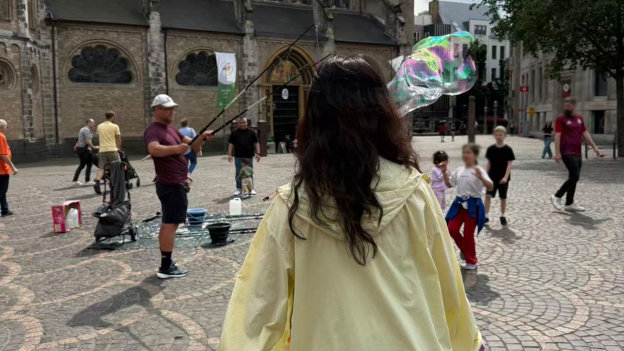
Another moment I cherish was wandering around the city center on a sunny afternoon and encountering a street performer creating giant soap bubbles. Children laughed and ran after them, and I found myself briefly sharing in that joy.
Privat
Soap bubbles in the center of Bonn
Because my stay lasted only four months, I was able to live in the University Guesthouse. My supervisor helped me secure the accommodation, and I was fortunate to obtain a room, as housing in Bonn is known to be difficult to find. Living in such a small and peaceful city was a clear contrast to the large cities where I had lived in China. I appreciated having a calm and steady daily rhythm—doing experiments, reading, cooking, exercising, and taking long walks around the surrounding fields—which allowed me to feel more connected to myself, even though I occasionally felt a bit lonely.
Administrative matters also went smoothly thanks to the university’s welcome center, which coordinated communication with the immigration office and supported me throughout the residence permit process. This assistance was invaluable, as handling these procedures independently would have been very challenging. I was also pleasantly surprised to be exempted from visa and residence permit fees due to receiving a German scholarship.
Cultural Experiences
I visited the Cologne Cathedral several times, always deeply impressed by its Gothic architecture and historical presence. Also, my supervisor, Prof. Wulf Amelung, is a genuinely kind person, and his family is equally warm and welcoming.
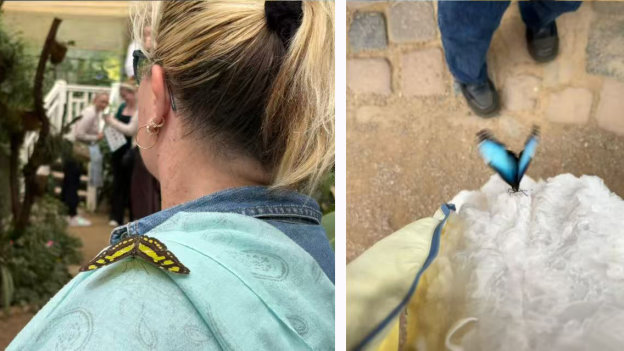
Shortly after I arrived in Bonn, he invited me and other colleagues to his home for dinner, which made me feel supported during my early days abroad. Later, his family also invited us to visit the Butterfly Garden (Schmetterlingsgarten). Surrounded by colorful butterflies, the day felt lively and full of wonder.
Privat
At the Butterfly Garden
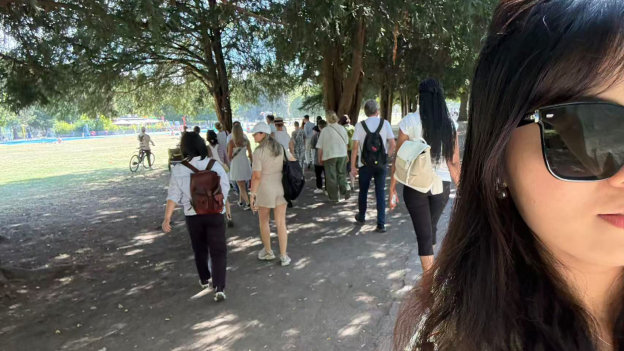
Our research group also visited Melaten-Friedhof cemetery in Cologne, a historic site where memory and art intertwine. Beyond organized activities, I appreciated many small cultural encounters in daily life. The staff and fellow visitors at the gym were always friendly, and total strangers often offered help when I was carrying a lot of items. It was a gesture that felt very warm.
Privat
Trip to the Melaten Cemetery in Cologne
Although I do not speak German, this did not pose a major challenge: most colleagues at the university speak fluent English, and outside campus, people in supermarkets, gyms, and restaurants could communicate in simple English. Unfortunately, I had limited time to study German during my four-month stay.
One notable challenge was related to IT access. The university enforces strict security rules: personal devices cannot connect to the lab’s network, and my office lacked both coverage and mobile signal, so I had to work in public classrooms, which was slightly frustrating. I greatly enjoyed German cuisine, especially crispy pork knuckle with sauerkraut and mashed potatoes. I also fell in love with the variety of German breads and I will always remember the tempting bakery windows and wish I could bring them all home!
Privat
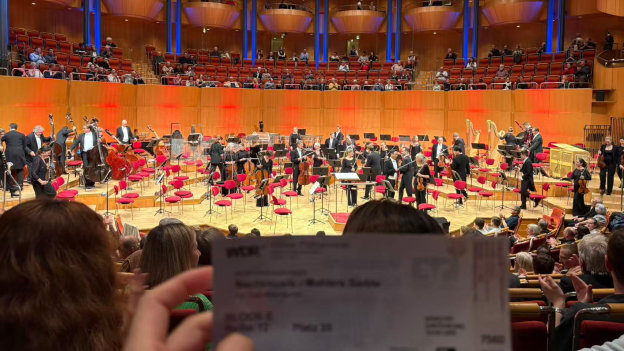
WDR Symphony Orchestra at Kölner Philharmonie
I also noticed several interesting aspects of daily life in Bonn. Many shops and supermarkets are closed on Sundays, and trains are often slightly delayed; yet people take these in stride without stress or anxiety. On Sundays, it is common to see residents enjoying a relaxed afternoon at street-side cafés, sipping coffee or tea, while the city center remains calm and quiet. These routines create a slower, more peaceful rhythm of life compared to the busier pace I was used to in larger cities, and contributed to a unique sense of calm and charm during my stay.
Thanks to the financial support of the DAAD-Stiftung, I also had the opportunity to attend a performance of the WDR Symphony Orchestra at the Cologne Philharmonie—an unforgettable experience.
Visit to the DAAD-Stiftung
At the end of my stay, I visited the DAAD-Stiftung (DAAD Foundation) at the DAAD office in Bonn, where I had a warm and meaningful meeting with Stefanie Lohmann, Ellen Geppert, and Ursula Paintner.
We discussed research, cultural learning, and future academic plans. I deeply appreciated the personal encouragement and support I received.
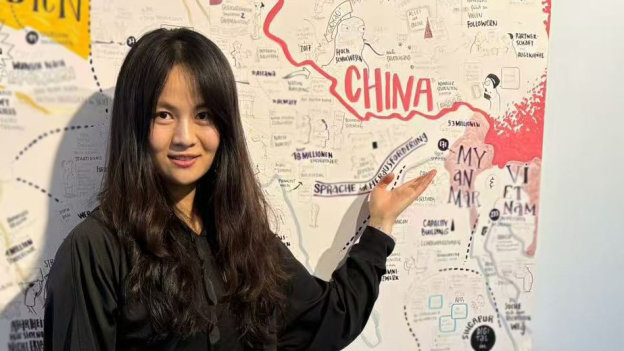
Privat
Visit to the DAAD-Stiftung at DAAD office
Conclusion
My stay in Bonn brought together research progress, cultural exploration, and meaningful human connection. I not only developed my scientific skills, but also experienced kindness, community, nature, and art.
These memories and lessons will accompany me as I continue my academic journey. I am sincerely grateful to DAAD-Stiftung for their financial support and trust.
------------------------
Since receiving funding from the DAAD Stiftung, Dr. Mei has achieved yet another academic success, as she kindly informed us in July 2026:
As an update to my report, I would like to share a recent publication. During my DAAD Stiftung-funded stay in Germany, Prof. Wulf Amelung and I further revised and improved this manuscript, after which it was submitted and accepted on 30 April 2026:
As of November 2025.