Gala Nettelbladt
 Privat
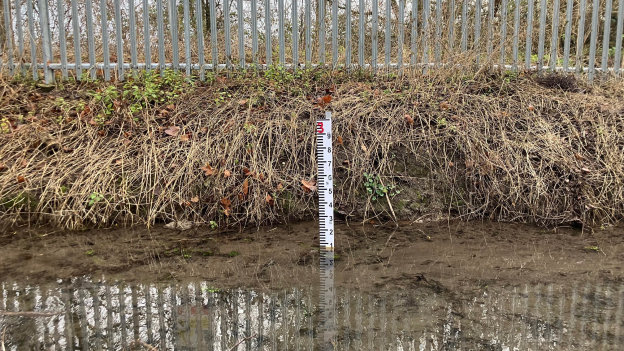
Water level of a pond in the center of Cambridge
"Academically, my residency at the University of Cambridge significantly advanced my postdoctoral project. It provided the ideal environment to collect qualitative data on water scarcity in Eastern England, offering both the "space and time" to develop new ideas and sharpen my research profile in the field of water governance.
Personally, my time in Cambridge was an enriching experience that provided fresh perspectives, inspiring encounters, and a deep insight into both the city and its unique research landscape."
Research on contemporary water scarcity mostly focuses on technical solutions or the political ecology of the issue. However, little is known about how local stakeholders negotiate and debate strategies for dealing with the water crisis. Dr. Gala Nettelbladt employed a political sociology approach to investigate this subject. With the support of the KSB Stiftung Scholarship by the DAAD-Stiftung, she was able to conduct her research at the University and in the city of Cambridge. She found the exchanges she had with her colleagues, both on campus and over the occasional pint after work, to be exceptionally inspiring.
Research Project
The KSB Stftung Scholarship enabled a three-month research stay at the University of Cambridge, completed in two stages (February–March and September) in 2025. I am currently a postdoctoral researcher at the Institute for European Urban Studies at Bauhaus University Weimar, where I study urban planning and negotiation processes surrounding water. This stay in Cambridge was a vital component of my postdoc project, "The Contentious Urban Politics of Planning for Water Scarcity".
It's a comparative project between England and Germany, and aims to analyse the conflicts around, and political and planning challenges of, water scarcity in cities. I am particularly interested in regions where scarcity is a relatively new phenomenon driven by climate change.
Using an interdisciplinary approach combining urban planning, sociology, and urban political ecology, I investigate governance models and conflict dynamics regarding water as an increasingly scarce resource commons.
Privat
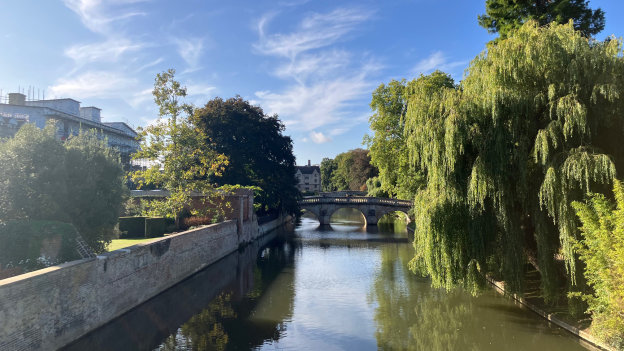
The river Cam
The primary goal of my stay abroad was to collect qualitative data for my English case study, the city of Cambridge itself, and to network with local academics. In Cambridge, water is scarce because the region is one of the driest in the UK, while consumption is rising due to new industrial developments.
Added to this, climate-driven droughts are shrinking the groundwater reserves that serve as the city’s primary source of drinking water. This has created a stark imbalance between available supply and the needs of a "thirsty city". As the city undergoes rapid economic growth, driven by the expansion of knowledge-intensive industries in the "Silicon Fen", it aims to become a world-leading cluster in technology and innovation.
Privat
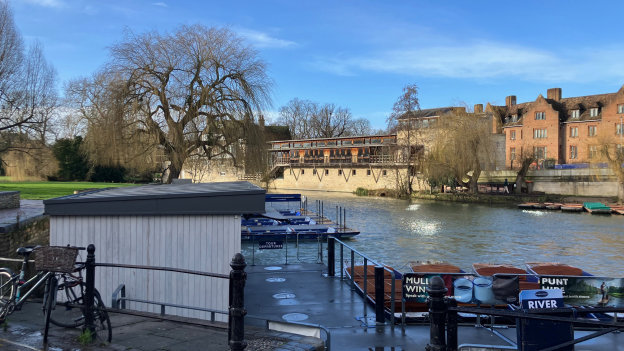
Boat dock
At a time when water scarcity is becoming an increasingly pressing issue in many cities due to the climate crisis, I am interested in more than just the technical and scientific solutions that are being developed locally to counteract the problem. My research project specifically focusses on the social aspects of water supply, and why certain groups benefit while others are left behind. It analyses the tensions arising between environmental goals and social justice, how scarcity is socially constructed and why some groups benefit in this process, while others end up empty-handed.
In tackling these questions, conducting research at the University in Cambridge was an incredible experience on its own, as well as making the city itself the subject of my work and making contact with so many local figures in the process. Unlike many researchers who interact with the university solely via institutional collaborations, my work focusses on the city of Cambridge itself and involved close exchange with the wider community.
Privat
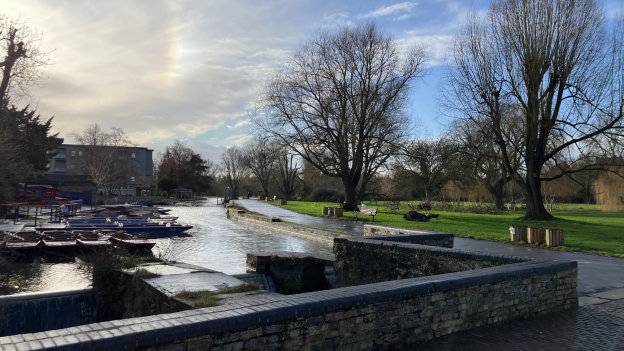
High water level
After gaining an overview of the local people and institutions involved during the first month based on document analysis, I then conducted expert interviews with represen-tatives from civil society, water management and administration. These included, for example, discussions with the chairman of an environmental association campaigning for less growth in the city, and the head of the local water management company.
I also conducted participant observation at events like a neighbourhood festival focused on water issues. These experiences confirmed that water scarcity is not merely a physical phenomenon, but very much a socio-political process where the future of the city, for instance, regarding the limitation of new construction in light of groundwater availability, is actively negotiated.
International experiences, results and new academic contacts
Working on site in Cambridge not only gave me access to a variety of academic resources, but also the opportunity to embed the issue of water conflicts within an international framework. In my research, I am particularly interested in places where water shortage is a relatively recent phenomenon. The KSB Foundation Scholarship allowed me to gain significant insights into the urban policies and planning processes in dealing with water scarcity in Cambridge.
The research showed that the multi-layered cooperation between communal, individual and societal interests is increasingly at odds with the fact that growth-oriented urban development policies are incompatible with the region's water supply, and that different planning scales (city, region, country) must be better integrated to govern water as a "transboundary object". Plans are currently being discussed to supply the city with water via a desalination plant on the coast.
Privat
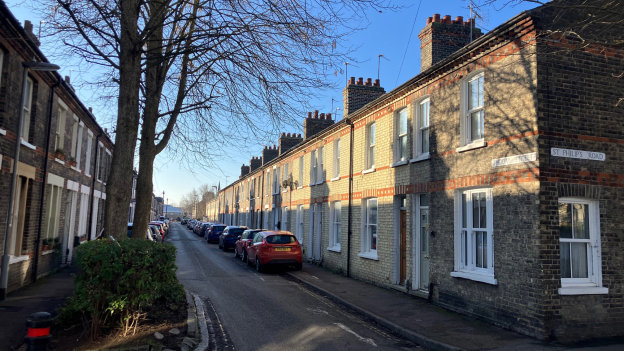
St. Philips Road
However, any planning decisions on this are still pending. A particular focus of my time at Cambridge was working with Professor Claire Colomb, a renowned expert in urban and regional planning. Her expertise in the comparative analysis of urban governance systems and critical urban research highlighted for me new perspectives in governance research and approaches to the field.
Together, we developed a publication in which we advocate greater integration of water and infrastructure planning with overall urban planning. The article is currently under review by the renowned journal Planning Theory & Practice. Her expert advice and discussions during our meetings have been invaluable and will significantly influence the direction of my future research.
Working and living in England, impact on academic career, next steps
I found the working culture at the University of Cambridge to be open, flexible, and international. I particularly appreciated the less formal, yet highly effective, atmosphere. Meetings with colleagues in the Department of Land Economy were always interesting. Whether discussing ideas over a pint in one of the many cosy pubs, exchanges with colleagues were consistently inspiring.
That said, when I wasn't out and about conducting research in the field, I happily spent most of my time in the University Library, the central library. A far cry from the daily hustle and bustle of my German university life, it gave me the quiet working environment for reading and writing that I'd been longing for. It's here that I found the focus I needed to refine my ideas and questions.
Privat
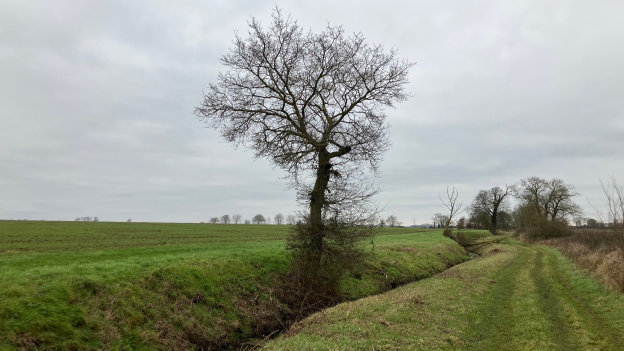
Trip through the moorland of The Fens
Technically, this scholarship served as the foundation for my upcoming DFG (German Research Foundation) application for a junior research group. The collaboration with Professor Colomb has opened doors to other partners who will be involved in the application.
This stay was a genuine turning point for my academic career, and I look forward to returning to Cambridge soon to finalise my application!
As of November 2025. The German version is the original.