Francis Oussou
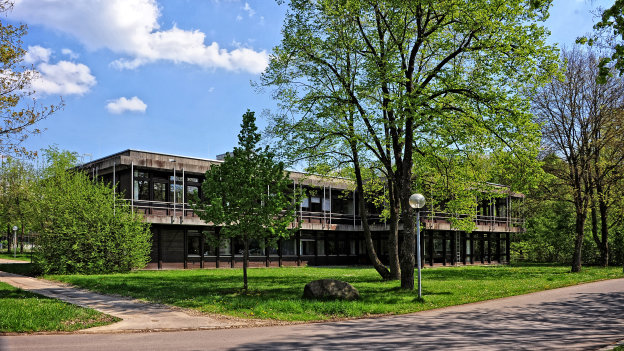 J. Bohn/Universität Augsburg
Faculty building at the University of Augsburg
“The opportunity offered by DAAD-Stiftung to undertake my research stay in Augsburg was a special occasion to connect my department to the existing partnership between my home institutions and the University of Augsburg. The scientific relationship that emanated from the opportunity helped me improve my skills in Earth Systems modeling and to interact directly with an international research team.“
Francis Oussou’s research aims to contribute to a better understanding of the impacts of land use changes and land management scenarios on groundwater reservoirs in the vulnerable region of West Africa. Thanks to the KSB Stiftung Scholarship by the DAAD-Stiftung, he spent four months at the University of Augsburg, developing a hydro-logical model aiming to preserve water resources and mitigate emissions.
He provides an insight into his work with hydrological models and reports on e.g. his experiences with German trains as well as food in the campus cafeteria:
For many years, the University of Augsburg has undertaken many research works in West Africa on Hydrology and Climate, collaborating with West African Universities including Federal University of Technology Akure (FUTA), and University of Abomey-Calavi.
Bringing together the expertise in Hydrology and Climate science from the institutions indeed improved my perception and understanding of the field, especially in terms of how to approach and contribute to the scientific debate at regional as well as global scales. I got a unique occasion to join field work on fluxes monitoring with Eddy Covariance platforms and participate in several training sessions on Earth System modeling.
Privat
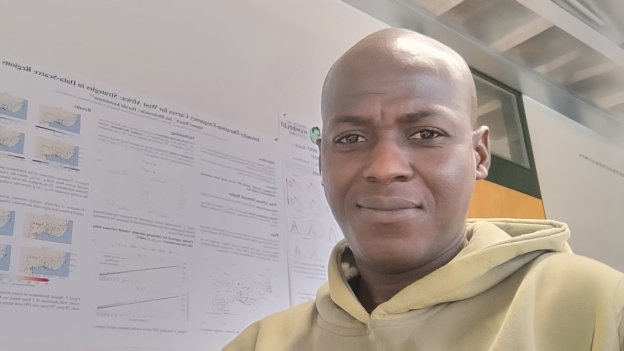
At the office
As mentioned in my proposal, the purpose was to use the hydrological model WRF-Hydro, already extensively studied by the University of Augsburg in West Africa, to evaluate subsurface parameterizations and afforestation impacts on water and energy fluxes in the region. The results are validated with Eddy Covariance fluxes and satellite-derived products. Idealized afforestation scenarios are tested over the study area to identify a reliable adaptation approach to reduce drought effect and enhance water and food security in the region.
West Africa rapid population growth and its derivative influences on land cover and water resources through urban and agricultural water use strongly increase the negative impacts of the climate change in the region. The purpose of this work was to (1) validate the state-of-the art physically-based hydrological model, WRF-Hydro groundwater schemes using observations and (2) evaluate the potential impacts of land use and land management scenarios on groundwater dynamics focusing on the Sahel sub-region.
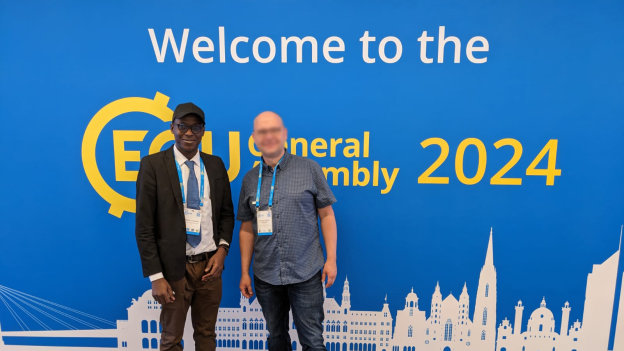
Privat
At the EGU (European Sciences Union) General Assembly
Reducing discrepancies in the simulation of water fluxes remains a key challenge in accurately representing surface water flux processes, particularly in regions with limited observational data. To achieve the first objective, with the help of the team at the University of Augsburg, we evaluated the sensitivity of the WRF-Hydro model to two parameterization schemes – Free Drainage (FD, default), TOPMODEL, and MMF - over West Africa.
The Chair of Hydrology and Regional Climate at the University of Augsburg has published many works on the WRF-Hydro model, which was one of the reasons why I decided to work with the institution in order to benefit from the valuable experience they have gathered on this hydrological model. The model calibration was performed for the Donga catchment (2009-2011) to assess the sensitivity of hydrological parameters, while simulations (2012-2022) were validated using remote sensing, reanalysis, and observational datasets.
H. Kunstmann
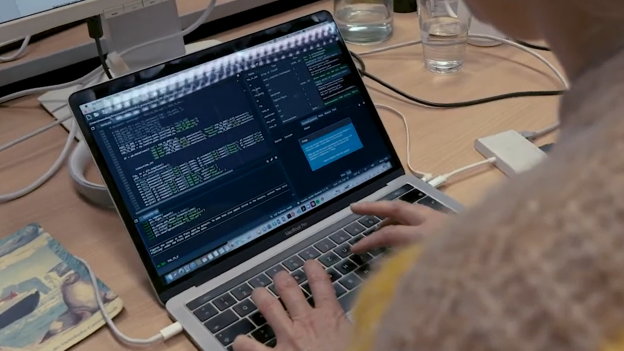
Research analysis
The results show that MMF outperforms the other schemes in representing surface water flux variables, especially in topographic convergence zones, where soil moisture and evapotranspiration in riverbeds increase by 20% with respect to FD. At the catchment scale, soil moisture, evapotranspiration, and groundwater storage are well simulated, with correlation coefficients reaching 0.9. At the regional scale, model performance for evapotranspiration is lower over the savannah zone, while in the Sahel and Guinea zones, KGE values exceed 0.75.
In addition, model calibration for the Donga River gives good performance with KGE value up to 0.74. The results of this study provide valuable insights for water resource management in West Africa, supporting climate change adaptation and food security. The aforementioned results are submitted as a manuscript to the Journal of Advances in Modeling Earth System (JAMES).
Further the afforestation scenarios impact on water balance especially in the Sahel region is the second step of the study which results are now available after my research stay: link.
H. Kunstmann
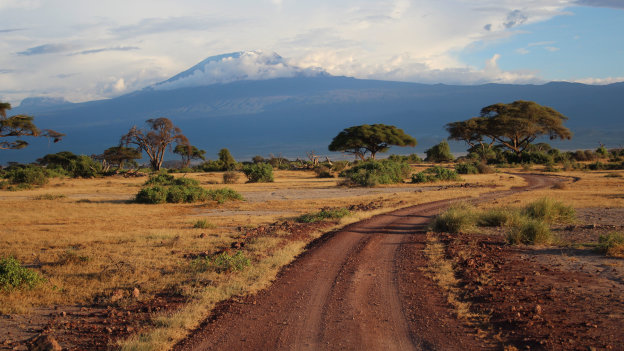
Field research in West Africa
The adopted afforestation approach consists of three idealized regreening of the current land use. The shrubland, bare soil, and grassland (SBG) in MODIS-IGBP land cover is substituted by the Evergreen Broadleaf Forest (EBF), Savanna (SAV), and Woody Savanna (WS; Fig. 2). The purpose of regreening the degraded land is to mimic the effects of Africa’s Great Green Wall initiative (PAGGW, 2018; Zeng, 2003) in the region and evaluate the potential change of water cycle and energy balance.
Based on the results obtained recently, the choice of afforestation approach should be based on whether the initiative intends to restore water in the subsurface, the land surface, or both. Idealized afforestation of degraded lands in the Sahel with Woody Savanna experiment (WS-VC) displays a reliable water restoration pattern as it reduces the water table depth, increases the average soil moisture (SM) in most of the region, and achieves a moderate water loss through evapotranspiration (ET). In Sissili basin, a similar range of ET is achieved with Savanna (SAV-VC) and WS-VC experiments.
However, Woody savanna increases the average SM, while Savanna depletes SM significantly. WS-VC decreases the groundwater table depth in most of the Sahelian region, while SAV-VC shows the opposite effect. These spatial patterns indicate that water restoration in Sissili might be achieved with vegetation density greater than SAV-VC and lower than WS-VC. Although all the idealized afforestation experiments reduce the water table depth in Oueme basin located in higher rainy condition, SAV-VC decreases significantly SM, with the highest ET.
Therefore, the vegetation density close to WS-VC offers a better water restoration in Oueme as it achieves lower ET compared to Evergreen Broadleaf Forest (EBF-VC). EBF-VD, SAV-VD, and WS-VD experiments with dynamic vegetation scheme have similar effects on ZWT as their counterpart (EBF-VC, SAV-VC, and WS-VC) but with a high magnitude of potential change. The manuscript will be soon submitted to a peer-reviewed journal as these results are necessary to guide climate change related decision making in the region.
During my research stay it was a pleasure to interact with the German people and culture. On the day of my arrival, the department was organizing a dinner to celebrate Christmas and I was invited to join by my supervisor. It was a quite positive experience to share that moment. Further, I met many nice individuals from my colleagues at the University to my land lady who was kind enough to rent out her apartment.
Privat
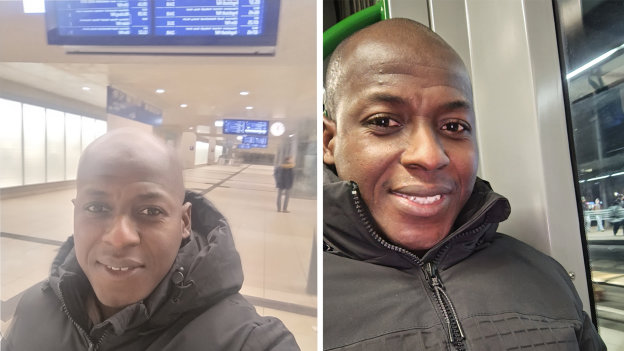
Travelling by train in Germany
I visited in my leisure time places like Munich and Nuremberg. Experiencing day to day life was wonderful as I had access to the basic things I need to have a regular life in a different culture. The university restaurant was my regular place of visit and I like the foods of course those that are similar to what I’m used to.
The train network was also amazing as it was often an occasion to interact with regular German people. I also visited a hospital for a check-up which at the beginning was a bit challenging to find but I finally got one where I got the necessary treatment and quite kind attention.
My senior colleagues organized a goodbye meet-up for me at the end of my research stay and it was a joyful moment we all shared. It is obvious that the German social condition offers a good opportunity for my research work and I will be glad to visit again when necessary.
As of July 2025.