Debraliz Isaac-Aragones
 Privat
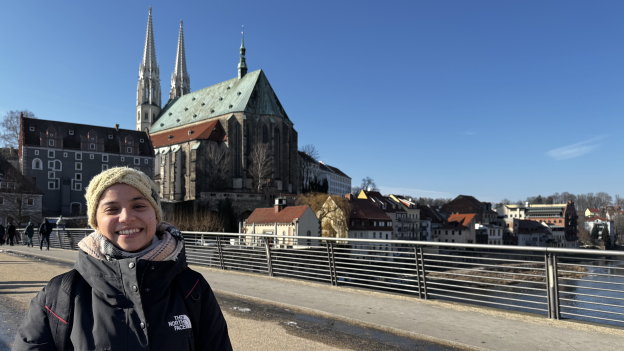
A sunny day in winter
“I am incredibly grateful for the opportunity provided by the KSB Stiftung Scholarship by the DAAD-Stiftung, which has afforded me the opportunity to advance my research in an international environment. With this support, I was able to supplement my Ph.D. dissertation at Purdue University in the USA, which focuses on the fundamentals of two-phase flow dynamics in cooling systems.
My work in Germany provided a broader system-level perspective, applying thermodynamic principles to optimize refrigerant performance in real-world heat pump systems. This experience deepened my commitment to international collaboration, which is crucial for driving innovation and excellence in the heating, ventilation, and air-conditioning field.”
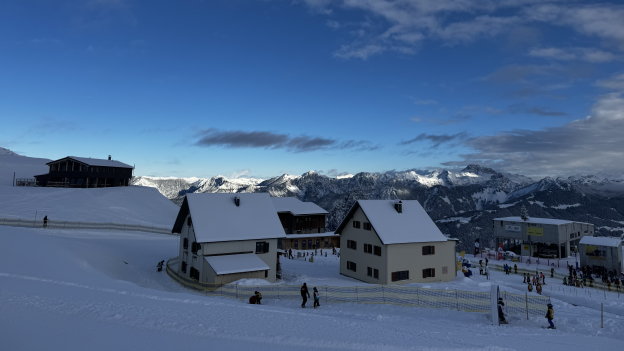
The KSB Stiftung Scholarship by the DAAD-Stiftung gave Debraliz Isaac-Aragones the opportunity to further her research in eco-friendly refrigerants. As the Technical University pioneers in a novel, energy efficient heat pump technology, Isaac-Aragones’ research stay in Germany was essential, giving her the chance to test the feasibility of her findings. Her time abroad also included the Christmas period and she deeply enjoyed Christmas markets with recently made friends as well as a skiing trip to the Austrian Alps.
During my six months stay, I had the opportunity to conduct research as a visiting scholar at the Schaufler Chair of Refrigeration, Cryogenics and Compressor Technology, supported by the KSB Stiftung Scholarship through the DAAD-Stiftung. Currently, I am pursuing my Ph.D. at Purdue University in the USA, where my research focuses on the fundamental physics of two-phase flow dynamics in passive thermosyphon thermal systems.
My research in Germany focused on optimizing hydrocarbon mixtures in multi-source commercial heat pumps systems, such as those drawing from sources such as sewage, cold water networks, server farms, or district heating networks. While my work at Purdue focuses on the fundamental physics of two-phase flow heat transfer, my work in Germany allowed me to apply my expertise to a broader, system-level analysis of real-world heat pump systems. I focused on optimizing hydrocarbon mixtures in multi-source heat pumps, an area that is becoming increasingly important for sustainable heating and cooling technologies.
Privat
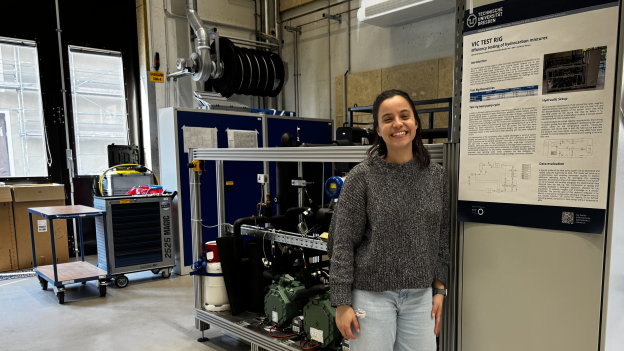
At the lab
My research project in Dresden entailed providing modeling support for an experimental study. I worked on running simulations that explored a wide range of possible operating scenarios for the heat pump. This allowed us to predict how the system would perform and choose the best refrigerant without having to physically test every scenario on the real equipment, which would have required months of work. While the refrigerants themselves were not new, the specific blends and temperature ranges we tested had not been studied before. This combination of novel mixture compositions and the unique capabilities of the TU Dresden test stand made this a valuable focus for advancing mixture-based heat pump design.
C.-I. Mokry www.tu-dresden.de
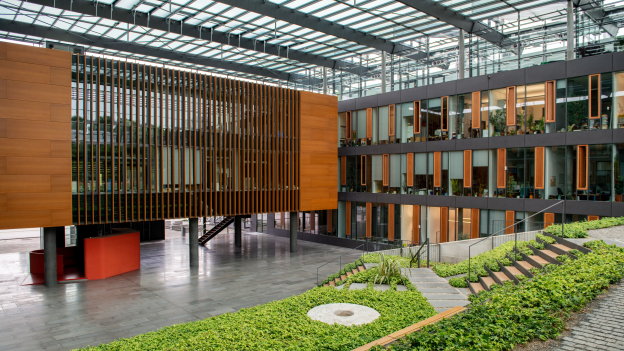
TU Dresden
In addition to conducting case studies, I worked alongside a Ph.D. student to improve the accuracy of the simulation using experimental data by fitting modeling correlations. Our key insights from directly comparing the simulations to experimental data are as follows: it is possible to simulate the system for refrigerant mixtures using only experimental data sets of the pure fluids, existing heat exchanger heat transfer correlations are insufficient to predict the behavior of mixtures, and the heat exchangers were the biggest source of inaccuracy in the simulation predictions.
I am eager to share that an abstract of our work has been accepted by the International Conference on Compressors and their Systems, and we will be presenting our results on September 10th to researchers in our field. Additionally, I will be able to use this work to satisfy some of my Ph.D. requirements. This is the link to the conference program.
Working alongside the scientists at the Schaufler Chair of Refrigeration Technology was an invaluable experience. The team has cultivated an exceptional and inclusive research environment, where collaboration and support are the core of daily work. My favorite part of working with this team was the constant collaboration among scientists, whenever I got stuck there was always someone to help. The team consisted of 10-15 members, including both Ph.D. students and group leaders, and was led by Prof. Dr.-Ing. Christiane Thomas. The team was organized by sub-topics related to refrigeration with 2-3 Ph.D. students each. I worked alongside one Ph.D. student, but often collaborated with students from the other groups.
M. Kretzschmar www.tu-dresden.de
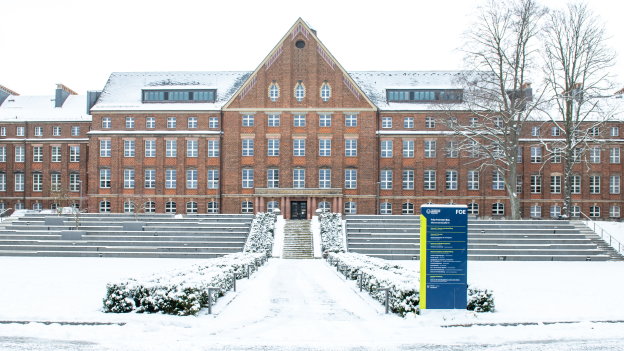
Fritz Foerster Bau
I got a taste of the real German working culture, as I was the only international researcher in the group and all my colleagues were German. Aside from the team leader, there were three other women in the group, me included, which is a high and encouraging number in my field. The main cultural difference I observed between the U.S. and Germany is that in Germany, Ph.D. students are full-time researchers treated as employees, with clear expectations to work on-site during regular hours. In the U.S., they are generally treated as students, with less formal work structures and fewer employment benefits. That being said, PhD programs in my field in Germany take longer to complete than in the U.S. (about 6–8 years compared to 4–5 years).
Aside from the conference paper, I found a topic for potential collaboration between my lab at Purdue and TU-Dresden. Through my analysis of the heat exchangers in the heat pump system, I found a gap in the literature. Existing heat transfer correlations for brazed plate heat exchangers are only valid for pure refrigerants, which behave differently than mixtures. I drafted a proposal for targeted experiments on TUD’s test stand that we could use to modify the existing correlations to correct for mixture behavior. In this collaboration, my Purdue lab would contribute heat transfer expertise for component-level analysis, while TUD would lead the system-level work and provide experimental data.
This collaboration will allow Purdue to expand its research portfolio into system-level heat pump studies and gain access to high-quality experimental data, while TU Dresden will benefit from Purdue’s expertise in heat transfer modeling and analysis, as well as co-authorship on high-impact publications. This project will result in a journal paper, in which I am first author, and will fulfill part of my Ph.D. dissertation requirements.
Privat
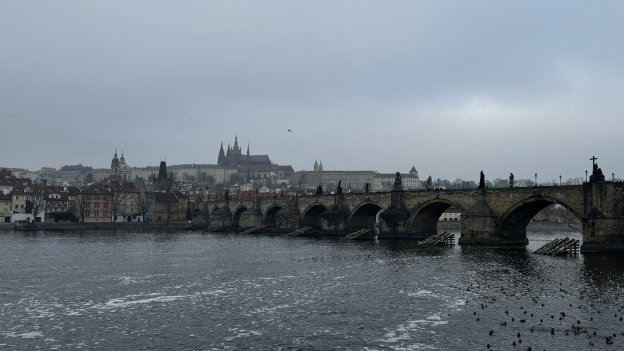
Visiting Prague
I am committed to advancing research in HVAC sustainability and hope to return to TUD as a research scientist after completing my doctoral degree in May 2026. My long-term goal is to further develop my system level expertise and apply my research skills in the German refrigeration industry, contributing to research and development of sustainable heat pump technologies.
I look forward to continuing international collaborations and working towards the shared goal of creating global engineering excellence in refrigeration and compressor technology as my career progresses. Life as a Ph.D. researcher in the U.S. and Germany are very different experiences. In the U.S., the lifestyle is more flexible but often requires long hours of work, including weekends. In Germany, students are research employees first and work a typical 40-hour week with clean boundaries between work and personal time.
Privat
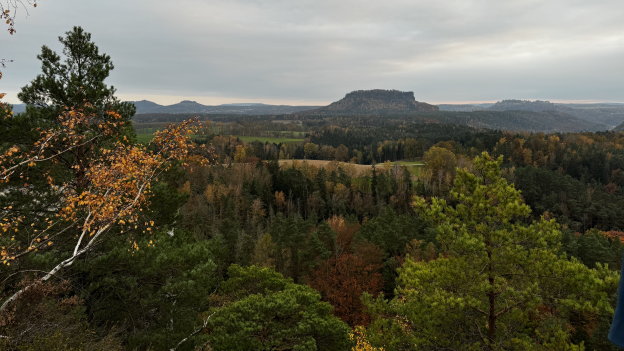
Saxon Switzerland
This was not my first time living in Germany, as I had done a summer internship a few years ago at the German Aerospace Center in Cologne. The public transportation was just as I remembered it: reliable (for the most part) and convenient. Coming from the U.S., where you heavily rely on a car, it was refreshing to be somewhere I did not need one.
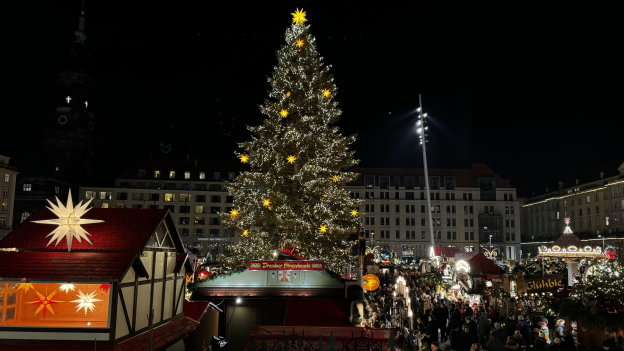
In Dresden, I was connected to other researchers in the area through the Welcome Center’s social events and made new friends to explore Germany with. We visited several Weihnnachtsmärkte, the Königstein Festung, and took a trip to the Germany-Poland border in Görlitz. I also reunited with friends from a previous visit to Dresden who took me hiking in the Sächsische Schweiz. For the first time, I traveled alone and visited Prague and Karlovy Vary, both of which were beautiful and memorable.
Privat
Skiing trip to Austria
Skiing for the first time in Austria was breathtaking. Reaching the top of the mountain and seeing the snow-covered landscape was one of the most beautiful experiences of my life, especially coming from Florida, where I had never seen snow growing up. Christmas is my favorite time of the year, and visiting the Christmas markets made it extra special for me, especially getting to enjoy it with new friends. The atmosphere was festive, with the lights and decorations, and there were so many different foods to try. My favorite part of German cuisine was the bread and baked goods. I especially loved the Vanillakrapfen from the bakery near my work that I would go to often.
Privat
Striezelmarkt in Dresden
During my stay, I lived in a shared apartment with one other girl whom I found through WG-gesucht. I was lucky that the room was fully furnished and perfect for a short-term stay. The area was called Neustadt, a lively and beautiful neighborhood with a young crowd, many restaurants, shops, and a lovely park. My commute was about 35 minutes, including a 15-minute walk to the tram stop and a 20-minute ride that dropped me right in front of my building. The commute was peaceful and worth it for living in such an exciting part of the city.
Während meiner Zeit in Deutschland, habe ich auch mein Deutsch geübt und verbessert. Ich hatte schon ein paar Klassen in den USA belegt, aber ich wollte mehr lernen. Also belegte ich für vierzehn Wochen einen B1 Nachtkurs in Dresden. Deshalb hatte ich eine einfachere Zeit in meinem Alltag in Deutschland. Ich könnte in den Restaurants oder Bäckereien bestellen. Ich habe auch beim Mittagsessen mit Kollegen ein bisschen sprechen. Es war nicht immer einfach zu kommunizieren. Ich habe noch viel zu lernen und meine Aussprache und Grammatik zu verbessern, aber ich genieße es Deutsch zu lernen!
Privat
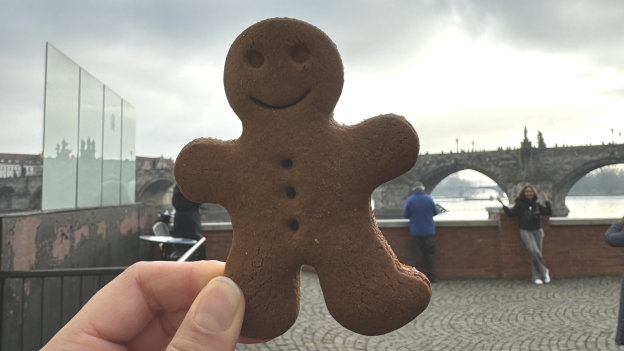
gingerbread man
Socially, it took time to build connections in Germany. I found that people are slow to open up, but once they do the relationships are genuine and long-lasting. One experience that left a strong impression on me was when my train to Dresden was stuck for an hour and we were informed we would have to transfer. The older woman sitting next to me started chatting as we waited, and with my broken German and her broken English, we managed to have a conversation.
It was obvious I was overwhelmed by the thought of having to navigate the transfers, and she kindly offered to help me. She went out of her way to not only guide me to the right train but also helped with my luggage and even gave me a hug goodbye. Her kindness showed me the quiet, steadfast support that feels so characteristic of German culture. In many ways, I’ve felt that same warmth in the connections I made at TUD. I left TUD feeling that I built a strong professional relationship with my supervisor and the PhD student I worked closely with, and I am confident that I can reach out to them for support in the future.
As of April 2025.